
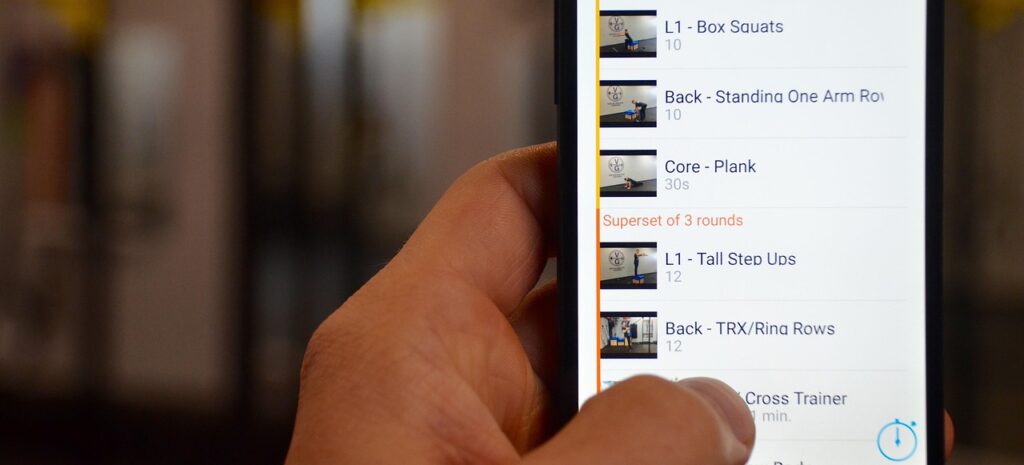
Why Tracking Beats Guesswork
Working out without a tracker is like hiking without a map. You might cover some ground, but you won’t know how far you’ve really gone or if you’re any closer to your goal. Fitness apps keep you honest. They log your reps, your miles, your weights, and more importantly, they tell you when you’re phoning it in. No more fooling yourself with “I think I worked out enough this week.”
Seeing progress boosts motivation. Whether it’s lifting five more pounds than last week or checking off a full month of consistency, that data adds fuel to your drive. You’re not just sweating you’re improving. And nothing kills excuses faster than visible results.
For beginners, apps add structure you didn’t know you needed. For seasoned athletes, they fine tune everything. Either way, these tools turn random effort into a plan you can stick to and build on.
MyFitnessPal
If you’re looking for one app that covers both training and nutrition, MyFitnessPal is still a go to in 2026. It’s not fancy, but it’s powerful. You can log your workouts, track calorie intake, and monitor macros all in one place. Whether you’re bulking, cutting, or just trying not to eat like a raccoon at 11 p.m., this app helps you stay dialed in.
The barcode scanner makes logging food almost brainless, and the massive database means you’re rarely tapping in items manually. It also syncs with nearly every wearable and third party fitness app you can think of, which saves time and keeps all your stats centralized.
For people who want structure and data while managing their body composition, MyFitnessPal delivers. You just have to actually use it and be honest.
Honorable Mentions
Not every great fitness app needs top billing. These three stand out for doing one thing really well:
Apple Fitness+ is a great pick if you’re already in the Apple ecosystem. The guided sessions ranging from strength to HIIT to meditation are polished, motivating, and updated regularly. With seamless Apple Watch integration, it keeps your heart rate, calories, and rings all in sync. If you want a “just press play” workout experience that tracks itself, this is it.
Hevy is built for lifters who aren’t into fluff. The UI is stripped down and focused exactly what you need to log sets, track PRs, and visualize progress. It shines with strength athletes who train with structure and care about stats more than looping animations. Easy to use, with none of the distraction.
Strava owns the cardio crowd. If you run, bike, swim, or hike with GPS, this is the one. Route tracking is rock solid, and community challenges keep things competitive. Plus, the social features make accountability feel less like pressure and more like fun.
Each of these fills a sharp niche. Pick according to your goals not the trend.
Syncing Apps with Your Goals
Fitness apps are only useful if they actually fit your workout style. Before you download the next trendy tracker, figure out what you’re really after. Strength training? Pick something with clear progression tracking and solid logging features, like Strong or Fitbod. Focused on cardio or HIIT? Go for apps with interval timers, guided routines, or GPS tracking Nike Training Club and Strava cover different ends of that spectrum.
Built in reminders and check ins are also key. A well timed nudge can be the difference between crushing a session and skipping it altogether. Look for something that sends prompts you won’t ignore. Not annoying, but persistent enough to help you keep the habit.
Planning and reflection are underrated tools, especially if you’re aiming for more than just workout streaks. Apps that let you schedule sessions ahead of time and log how you felt afterward help you adjust smarter. Progress isn’t just about numbers. It’s about showing up, learning, and adapting when something’s not clicking.
You don’t need a gym membership or even dumbbells to get stronger. Bodyweight workouts are still a front runner for building strength, balance, and cardio endurance without any equipment. All you need is some floor space, a bit of discipline, and a solid plan.
If your fitness app has a bodyweight category, great scroll less, sweat more. Some of the best at home routines stack movements like push ups, squats, planks, and burpees into quick circuits that hit your whole body. These can be as brutal or beginner friendly as you make them.
Not sure where to begin? Explore Full Body Workouts You Can Do at Home Without Equipment. It breaks things down by intensity and offers structure you can follow with just your phone. Consistency beats complexity. Show up, do the reps, and watch your fitness stack up.
Final Take
Choose Usability Over Flash
At the end of the day, the best fitness app is simply the one you’ll consistently open and actually use. Whether you’re training for a marathon or just trying to move three times a week, choosing an app that fits your real life habits is more important than picking the flashiest interface.
Match With Your Goals
Before you download everything, ask yourself:
What are you trying to achieve strength, endurance, consistency, weight loss?
Do you need in depth analytics, or just basic tracking?
Are you motivated by reminders, visuals, or community features?
Consider Your Style
Not every app fits every user. Some thrive with structured plans and AI coaching, while others just want to see which days they worked out. Pick what feels like a natural part of your day so tracking doesn’t become one more task to dread.
If you’re data driven: choose apps with deep progress metrics
If you like flexibility: pick apps that adapt to your equipment and time
If simplicity is key: go for clean interfaces with easy logging
Let Data Drive Results
Consistency plus data equals progress. Tracking doesn’t just keep you honest it gives you proof that small wins add up.
Use trends to spot plateaus or overtraining
Celebrate personal records (even the small ones)
Let the numbers tell you when it’s time to push or rest
Stay consistent, be honest with yourself, and let your fitness app be the tool that keeps you moving forward one logged workout at a time.

 William Snydersoton is the kind of writer who genuinely cannot publish something without checking it twice. Maybe three times. They came to nutrition and healthy eating tips through years of hands-on work rather than theory, which means the things they writes about — Nutrition and Healthy Eating Tips, Effective Diet Plans, Weight Management Strategies, among other areas — are things they has actually tested, questioned, and revised opinions on more than once.
That shows in the work. William's pieces tend to go a level deeper than most. Not in a way that becomes unreadable, but in a way that makes you realize you'd been missing something important. They has a habit of finding the detail that everybody else glosses over and making it the center of the story — which sounds simple, but takes a rare combination of curiosity and patience to pull off consistently. The writing never feels rushed. It feels like someone who sat with the subject long enough to actually understand it.
Outside of specific topics, what William cares about most is whether the reader walks away with something useful. Not impressed. Not entertained. Useful. That's a harder bar to clear than it sounds, and they clears it more often than not — which is why readers tend to remember William's articles long after they've forgotten the headline.
William Snydersoton is the kind of writer who genuinely cannot publish something without checking it twice. Maybe three times. They came to nutrition and healthy eating tips through years of hands-on work rather than theory, which means the things they writes about — Nutrition and Healthy Eating Tips, Effective Diet Plans, Weight Management Strategies, among other areas — are things they has actually tested, questioned, and revised opinions on more than once.
That shows in the work. William's pieces tend to go a level deeper than most. Not in a way that becomes unreadable, but in a way that makes you realize you'd been missing something important. They has a habit of finding the detail that everybody else glosses over and making it the center of the story — which sounds simple, but takes a rare combination of curiosity and patience to pull off consistently. The writing never feels rushed. It feels like someone who sat with the subject long enough to actually understand it.
Outside of specific topics, what William cares about most is whether the reader walks away with something useful. Not impressed. Not entertained. Useful. That's a harder bar to clear than it sounds, and they clears it more often than not — which is why readers tend to remember William's articles long after they've forgotten the headline.